WPC vs Treated Wood: Comprehensive Comparison
When selecting outdoor flooring materials, WPC (Wood Plastic Composite) decking and traditional treated wood are two primary options. Here is a comparison of key performance indicators:
Weather Resistance
WPC decking uses polymer composite materials with excellent UV resistance and waterproof performance, achieving a service life of 15-25 years. While treated wood undergoes chemical processing, it still develops cracking, warping, and fading under long-term outdoor exposure, typically requiring maintenance every 2-3 years.
Environmental Safety
WPC decking contains no harmful chemicals, with a smooth splinter-free surface that is safe and comfortable for barefoot walking. Treated wood uses chemical preservatives such as CCA or ACQ, posing potential chemical leaching risks, and is not recommended for children's play areas.
Maintenance Costs
WPC decking is virtually maintenance-free, requiring only periodic cleaning to maintain good appearance. Treated wood needs regular application of preservative oil and wood wax, resulting in higher long-term maintenance costs. Considering both initial purchase and maintenance costs, WPC decking has a lower total cost of ownership.
Application Scenario Details
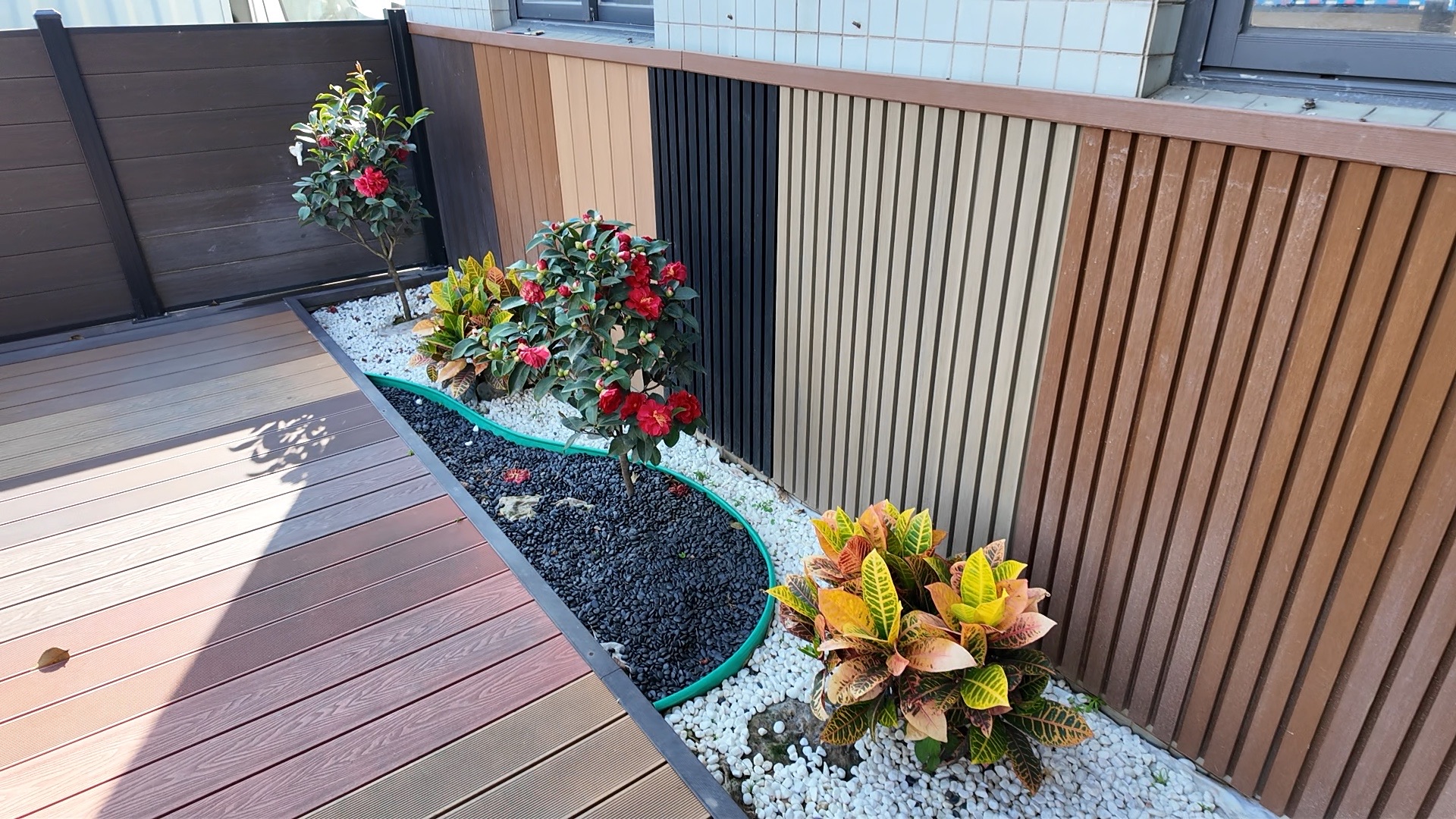
Terrace Areas
Terraces are the most common application scenario for WPC outdoor decking. Key installation points include:
- Ensure the base has sufficient drainage slope (1-2%) to prevent water accumulation
- Recommended joist spacing of 300-400mm, determined by board specifications and expected load
- Reserve 3-5mm thermal expansion gaps between boards
- Use edge trim for a clean finished appearance
Garden Areas
WPC decking in gardens is typically used for pathways, gazebos, and leisure platforms. Special attention should be paid to ground leveling and drainage design. Installing landscape fabric beneath the decking is recommended to prevent weed growth.
Pool Areas
Decking around pools requires special consideration for slip resistance. The anti-slip surface treatment of WPC decking makes it ideal for pool areas. Ensure the drainage slope directs water away from the pool to prevent backflow.
Installation Tips
- Place boards on-site for 24-48 hours before installation to acclimate to local temperature and humidity
- Use stainless steel or anti-corrosion treated fasteners to prevent metal corrosion
- Apply edge sealing wax to board ends after cutting
- Install expansion joints for large-area installations, typically every 6 meters